Garmin
Buy Garmin for the widest model selection, better maps, stronger smartwatch features, broader outdoor support, and the most complete all-around GPS watch ecosystem.
Updated: Oct 09, 2026
GPS Watch Comparison 2026
Garmin is the better choice for most buyers. It offers the broader lineup, better mapping, stronger smartwatch features, more outdoor options, and a more complete ecosystem. Polar is the better specialist choice for athletes who prioritize recovery guidance, sleep analysis, heart-rate training, and structured coaching.
Buy Garmin for the widest model selection, better maps, stronger smartwatch features, broader outdoor support, and the most complete all-around GPS watch ecosystem.
Buy Polar when recovery, sleep, heart-rate training, and structured coaching matter more than maps, payments, apps, and everyday smartwatch functions.
Which brand should you buy? Garmin is the safer choice for most runners, triathletes, hikers, and everyday smartwatch buyers. Polar makes more sense for athletes who want a focused training and recovery platform and do not need a large app ecosystem or advanced lifestyle features.
Garmin vs Polar is most useful when you already know you want a training-focused GPS watch. If your decision is broader, use these routes first.
| Category | Garmin | Polar | Winner |
|---|---|---|---|
| Overall Choice | Broader lineup and more complete ecosystem | More focused training and recovery experience | Garmin |
| Running | More models, more maps, more race and smartwatch tools | Excellent training guidance and recovery analysis | Garmin |
| Triathlon | Industry-leading multisport depth across several price tiers | Strong Vantage platform for structured endurance training | Garmin |
| Recovery | Training Readiness, HRV, Body Battery, sleep, and recovery time | Nightly Recharge, Recovery Pro, sleep, and focused readiness guidance | Polar |
| Sleep Tracking | Detailed and integrated with broader wellness metrics | One of Polar’s strongest areas, with clear recovery context | Polar |
| Maps and Navigation | Best-in-class offline maps and broader navigation tools | Offline maps and navigation available on selected premium models | Garmin |
| Outdoor Use | Fenix, Enduro, Instinct, and premium adventure features | Grit X family provides rugged outdoor options | Garmin |
| Battery Life | Excellent, with more ultra-endurance and solar choices | Very good across running and endurance models | Garmin |
| Smartwatch Features | Payments, music, apps, safety tools, notifications, and broader integrations | Basic notifications and limited lifestyle features | Garmin |
| Training Guidance | Deep metrics and broad sport support | Clear, coach-like guidance with strong recovery emphasis | Tie |
| Value | More choices but premium models become expensive | Pacer Pro and Vantage M3 offer strong focused value | Tie |
Garmin wins for most runners because the Forerunner lineup covers more price tiers and gives buyers more room to move from basic GPS watches to premium AMOLED models with maps, music, payments, and advanced race tools.
Polar remains highly competitive for runners who prefer simpler, recovery-led training guidance. The Pacer Pro is especially attractive because it provides useful training and recovery tools at a much lower cost than many premium running watches.
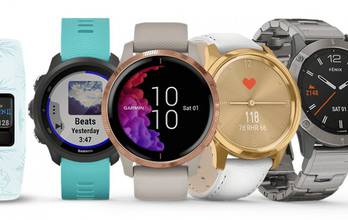
Garmin-focused runners can narrow the choice with the Garmin Forerunner lineup. If you want to compare beyond these two brands, use Best Running Watches.
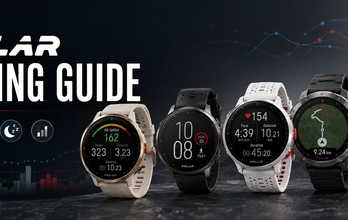
If Polar is already your preferred training platform, continue with the Polar Buying Guide.
Garmin is the stronger triathlon brand overall. It offers multisport support across more models and combines race tools, mapping, navigation, battery options, and smartwatch functions in one ecosystem.
The Polar Vantage V3 remains a serious endurance watch. It is best for athletes who prefer Polar’s recovery platform and structured training environment over Garmin’s broader feature set.
Polar wins this category. Recovery and sleep are central to the way Polar presents training data. Its ecosystem is particularly good at turning sleep and heart-rate information into simple guidance about whether to train hard, reduce intensity, or prioritize recovery.
Garmin provides more total metrics, including HRV Status, Body Battery, Training Readiness, recovery time, stress, and sleep data. However, some buyers may find Polar’s interpretation clearer and more coach-like.
If recovery, sleep, readiness, and passive health tracking matter more than live workout screens or maps, a smart ring may fit better than either watch ecosystem.
Garmin wins clearly. Premium Garmin models provide more mature mapping, broader route tools, and a larger selection of outdoor watches. The Fenix family is a better choice than Polar for buyers who need one watch for hiking, navigation, multisport training, and everyday wear.
Polar has improved its outdoor lineup through models such as the Grit X2 Pro Titan and premium Vantage watches, but its map ecosystem is still narrower.
If Garmin wins for you specifically because of maps, hiking, or rugged outdoor use, continue to the Garmin Fenix Hub or compare broader options in Best Hiking Watches.
Timing note: if you are considering a full-price Fenix 8 and do not need it immediately, see the Garmin Fenix 9 pre-launch guide before buying.
Garmin is substantially better for everyday smartwatch use. Depending on the model, buyers can get payments, onboard music, richer notifications, safety features, apps, watch faces, and more integrations.
Polar watches are training devices first. They provide the core daily functions many athletes need, but they are not the best choice for buyers seeking a highly connected smartwatch.
Choose a Forerunner when running and multisport performance are the main priorities. The lineup offers more choices than Polar’s running range.
Explore Garmin ForerunnerChoose the Fenix 8 for the broadest premium combination of maps, outdoor use, endurance training, and daily smartwatch features.
Read Fenix 8 Buying GuideChoose the Vantage M3 for the best balance of Polar training tools, modern hardware, and price.
Check Vantage M3 Price on AmazonChoose the Pacer Pro for a focused running watch that delivers Polar’s training and recovery experience without premium pricing.
Check Pacer Pro Price on AmazonChoose the Vantage V3 for serious endurance training when Polar’s ecosystem matters more than Garmin’s broader smartwatch platform.
Check Vantage V3 Price on AmazonChoose the Grit X2 Pro Titan when rugged materials and Polar’s outdoor training platform are the priority.
Check Grit X2 Pro Price on AmazonGarmin is better for most buyers because it offers more models, better maps, stronger smartwatch features, and a broader ecosystem. Polar is better for buyers who prioritize recovery and structured training guidance.
Accuracy varies by model, fit, activity, and conditions. Both brands offer strong GPS and heart-rate tracking. The bigger difference is how each platform interprets and presents the data.
Garmin is better for most marathon runners because it offers more watch choices, maps, race tools, and daily-use features. Polar is a strong alternative for runners who value recovery guidance and simpler coaching.
Garmin is the stronger overall triathlon brand because it provides multisport support across more models and price tiers. Polar Vantage watches remain credible choices for structured endurance training.
Polar has the edge for buyers who want clear sleep and recovery interpretation. Garmin collects extensive sleep and wellness data, but Polar often presents the recovery context more simply.
Garmin. Its premium watches provide a more mature mapping and outdoor-navigation experience.
Garmin wins this comparison for most buyers. Its broader lineup, better maps, stronger outdoor capabilities, richer smartwatch features, and larger ecosystem make it the safer long-term purchase.
Polar is still the better choice for a specific type of athlete: someone who values recovery, sleep, heart-rate training, and clear coaching more than apps, payments, music, or advanced navigation.
Choose Garmin for versatility. Choose Polar for focus.
Jul 21, 2026
Jul 21, 2026
Feb 29, 2020

May 23, 2025
Comments: 0