
Genuine Tineco
Tineco S5 / iFLOOR 5 Breeze Roller Set
Verified listing compatibility: FLOOR ONE S5 and iFLOOR 5 Breeze Complete. The listing specifically says it is not for S5 Steam, S5 Combo, or other models.
Check on AmazonUpdated: Oct 16, 2026
Streaks usually do not mean your wet dry vacuum is defective. The most common causes are a dirty or worn roller, debris around the scraper or cleaning channel, clogged water/suction openings, the wrong cleaning solution, or using the machine on a surface it was not designed to wash.
| Likely Cause | What It Looks Like | What to Do First |
|---|---|---|
| Dirty roller | Gray or dirty lines repeat behind the cleaning head | Run self-cleaning if available, then remove and manually clean the roller as directed. |
| Worn roller | Uneven water pickup, recurring streaks even after cleaning | Inspect the roller for wear, flattening, or permanent contamination; replace if required. |
| Dirty/deformed scraper | Water lines or uneven recovery across the roller width | Remove debris from the scraper and inspect it for damage. |
| Clogged spray or suction path | Dry bands, wet bands, or inconsistent water recovery | Clear the spray openings, suction ports, and debris channel according to the manual. |
| Wrong / excessive solution | Cloudy film, foam, sticky residue, repeated streaking | Use the manufacturer-approved solution and the specified dilution. |
| Floor incompatibility | Haze or uneven finish that persists despite a clean machine | Confirm the surface is sealed and approved for the floor washer. |
| Technique / over-wetting | Lines at turns or where passes overlap | Use smooth passes and follow the model's water-flow technique. |
The roller is constantly touching both clean solution and dirty floor residue. Even a machine with automatic self-cleaning can eventually need manual roller and channel maintenance.
Tineco's current troubleshooting for several FLOOR ONE models lists dirt or debris on the brush roller and in the channel as a direct cause to check when the machine leaves streaks. Its support guidance for older FLOOR ONE models also recommends cleaning the brushroll after use.
A wet dry vacuum needs to distribute clean water across the roller and then remove dirty water consistently. Anything that interferes with that process can create streaks.
Tineco specifically includes a dirty or deformed scraper in its streak troubleshooting for multiple FLOOR ONE models, while other support pages tell owners to check clogged spray holes and brush suction ports. Roborock similarly describes precision scraper and moisture-control systems as part of preventing drips and streaks on its newer roller-mopping systems.
Do not poke tools into openings unless the manual for your model tells you how to clear them. The goal is to restore the designed water and airflow path, not damage it.
More detergent does not necessarily mean a cleaner floor. Excess solution can leave residue, increase foaming, and make the roller harder to rinse clean.
Use the cleaner and dilution specified for the exact machine. Tineco, for example, warns that third-party solutions can produce excessive foam in its floor washers. Other brands may have different requirements, so check the manual rather than assuming that one floor-washing formula is safe for every machine.
If cleaning the roller fixes the problem only briefly—or does not fix it at all—inspect it for wear. A flattened, damaged, or permanently contaminated roller may no longer spread and recover water evenly.
Tineco's streak troubleshooting for several models explicitly includes roller replacement as a diagnostic step and cites a model-specific replacement cycle. Do not apply one brand's interval universally; use the replacement guidance for your exact floor washer.
If the roller is the problem, replace it with the exact model-compatible roller specified for your machine. Do not assume rollers are interchangeable across a brand—or even across models that look nearly identical.
Technique matters more on some floor washers than others. Older trigger-controlled models can leave excess water if too much solution is applied. Tineco's iFLOOR instructions, for example, recommend overlapping strokes slightly to help prevent streaking and releasing the solution trigger to avoid over-wetting.
Newer smart floor washers automate more of the water flow, but smooth, deliberate passes still help the machine recover dirty water consistently. Avoid repeatedly pivoting in one wet spot unless the model is designed for that movement.
If the machine is clean and working normally but the floor still looks hazy, confirm that the surface itself is suitable for wet floor washing. Tineco's troubleshooting repeatedly specifies sealed, even hard floors when diagnosing streaks.
For hardwood specifically, the floor finish and the flooring manufacturer's care instructions matter. If hardwood is your main surface, see Best Wet Dry Vacuums for Hardwood Floors before assuming every floor washer is equally suitable.
Not always. A thin visible line after drying may be residue or uneven roller contact. A visibly wet floor can point more strongly toward water recovery, scraper, suction-path, roller, or technique issues.
| Symptom | Check First |
|---|---|
| Cloudy film after floor dries | Cleaning solution amount/type and dirty roller residue |
| Parallel dirty lines | Roller and scraper cleanliness |
| One side wetter than the other | Roller seating, scraper, spray distribution, suction openings |
| Water at turns | Technique, roller/scraper condition, excessive solution flow |
| Streaking returns immediately after cleaning roller | Roller wear or another water-recovery problem |
Replace the roller when the manufacturer says it has reached its service interval, when it is visibly worn or damaged, or when thorough cleaning no longer restores even floor contact and water recovery.
Compatibility matters. A replacement roller should match the exact model or manufacturer part number; a physically similar roller is not enough. The verified examples below are intentionally tied to specific model families rather than presented as universal wet dry vacuum rollers.
If cleaning no longer restores the roller and it is visibly worn, these Amazon US listings are examples with explicit model-family compatibility. Check the exact model number on your machine before ordering. Third-party parts are identified as such rather than presented as OEM products.
Verified listing compatibility: FLOOR ONE S5 and iFLOOR 5 Breeze Complete. The listing specifically says it is not for S5 Steam, S5 Combo, or other models.
Check on Amazon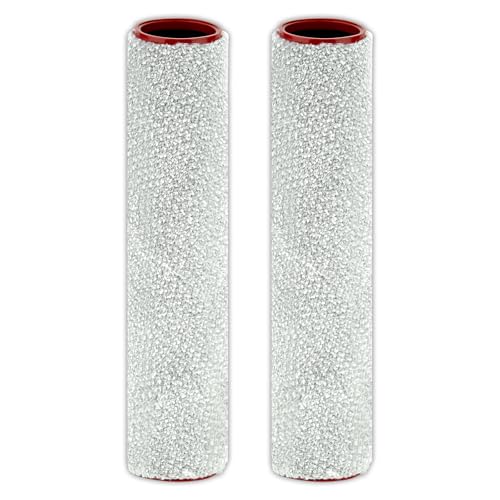
Verified listing compatibility: Dreame H15 Pro, H15 Mix, and H12 Pro FlexReach; the listing explicitly excludes the standard H12 Pro. This is a BRUVISH third-party replacement, not a Dreame OEM roller.
Check on Amazon
Verified listing compatibility: Roborock F25. This Jpbaisqic listing is a third-party accessory kit, not an official Roborock replacement part.
Check on AmazonAs an Amazon Associate I earn from qualifying purchases. Amazon listings and compatibility claims can change; verify your exact model before purchase.
If streaking looks more like cloudy film than uneven water pickup, check the cleaning solution before replacing a roller. For Tineco owners, the genuine Tineco solution below is a verified Amazon option for the listed non-steam families.

Verified listing compatibility: i5/i6 Stretch, FLOOR ONE S5/S6/S7/S9 Artist, S6/S7/S9 Master, and Breeze series. The listing explicitly excludes the iFLOOR 5 Steam and S5/S7/S9 Artist Steam series.
Check on AmazonDo not replace a floor washer just because it streaks once. A new machine becomes a reasonable consideration when routine maintenance and the correct consumables do not solve the problem and the machine also has persistent water-delivery, suction, roller-drive, sensor, or other hardware faults.
| Situation | Best Next Step |
|---|---|
| Roller is dirty | Clean it; do not buy anything yet. |
| Roller is worn but machine works well | Buy the exact compatible replacement roller. |
| Wrong cleaner / too much solution | Correct the solution and dilution. |
| Repeated streaking plus unresolved water/suction fault | Use manufacturer troubleshooting/support before replacing the machine. |
| Older machine has multiple worn components or expensive faults | Compare repair cost with a current model in Best Wet Dry Vacuums. |
Tineco's own troubleshooting points to several possibilities: the wrong cleaning solution, a worn roller, dirt on the scraper, debris in the roller/channel, clogged spray or suction openings on some models, or an unsuitable floor surface.
Yes. Excess or high-foaming cleaner can leave residue and interfere with normal dirty-water handling. Use the solution type and dilution specified for your machine.
Follow the exact model's instructions. Self-cleaning is useful for routine roller maintenance, but tanks, channels, scrapers, and removable rollers can still require additional cleaning.
Check the roller, scraper, suction path, dirty-water system, and any clogs first. A worn roller or uneven water recovery can also leave wetter areas behind.
Yes, eventually, on machines that use replaceable rollers. Replacement timing varies by brand and model, so use the manufacturer's guidance and verify exact compatibility before ordering.
Only if your machine's manufacturer permits it. Some brands specify their own low-foaming solution and warn that incompatible cleaners can create excessive foam or other problems.
Most streaking problems should be diagnosed before you buy a new wet dry vacuum. Clean the roller and channel, inspect the scraper, check the spray and suction path, use the correct cleaning solution, and confirm the floor is compatible.
If the machine works normally but the roller is worn, replace the exact compatible roller. Only move toward a new floor washer when maintenance, consumables, and manufacturer troubleshooting no longer make sense.

Aug 26, 2026
Aug 24, 2026
Aug 24, 2026


Comments: 0