Steam Cleaning Safety at a Glance
| Surface |
Usually Safe? |
What to Check |
| Sealed hardwood |
Sometimes / often, model-dependent |
Floor manufacturer must allow steam; use a steam mop designed for sealed hard floors and test first. |
| Laminate |
Sometimes |
Only if sealed and both floor maker + steam cleaner allow it. Avoid prolonged steam at seams. |
| Vinyl |
Sometimes |
Use only where the flooring manufacturer permits heat/steam. |
| Ceramic tile |
Yes, if glazed/sealed as required |
Do not assume unglazed ceramic is safe. |
| Stone / marble |
Often |
Check stone finish/sealer and cleaner instructions. |
| Grout |
Yes |
Use an appropriate detail nozzle/brush; be gentler on silicone joints. |
| Kitchen counters |
Often |
Material must tolerate heat/moisture; avoid vulnerable seams and finishes. |
| Stovetops / appliance exteriors |
Often, with care |
Unplug appliance where appropriate and keep steam away from electrical openings/controls. |
| Microwave / oven interior |
Some multipurpose models support this |
Follow appliance and steamer instructions; never steam electrical components. |
| Upholstery |
Sometimes |
Check fabric care label, colorfastness and steam-cleaner attachment guidance; test hidden area. |
| Unsealed wood |
No |
Heat and moisture can penetrate and damage the material. |
| Wax-polished floors/furniture |
No |
Steam can remove sheen or disturb wax finishes. |
| Electronics |
No |
Do not direct steam into electrical devices or components. |
The First Rule: “Steam-Safe” Depends on Both the Surface and the Machine
Steam cleaners are not all designed for the same jobs. A floor-only steam mop may be approved only for sealed hard floors, while a multipurpose machine can include handheld nozzles and fabric tools for kitchens, bathrooms, upholstery, windows, and other above-floor surfaces.
BISSELL's PowerFresh Slim, for example, is designed for sealed hard floors and also converts into a handheld/extended-reach steamer with tools for sinks, counters, stoves, microwaves, upholstery, toys, showers, and other approved surfaces. Shark's Lift-Away steam cleaner likewise lists sealed hard floors, countertops, appliances, upholstery, car interiors, grout, crevices, and window screens among its intended uses.
Best practice: do not use a tool on a surface merely because another steam cleaner brand says steam is safe there. Follow the manual for the machine you actually own.
Can You Steam Clean Hardwood Floors?
Only when the hardwood is sealed and the flooring manufacturer permits steam. Shark and BISSELL both market certain steam mops for sealed hardwood floors, but both also warn against unsealed surfaces and recommend checking care instructions first.
The risk is not just visible water. Steam combines heat and moisture, and vulnerable seams, damaged finish, or unsealed wood can allow moisture to enter the material.
Do not generalize from “hardwood safe.” That claim applies to compatible sealed flooring used according to the machine instructions—not every wood floor.
Can You Steam Clean Laminate and Vinyl?
Some steam-mop manufacturers list sealed laminate and vinyl among compatible surfaces. Shark's current SteamSpot, for example, lists sealed hardwood, laminate, tile, stone, marble, and vinyl.
But the flooring manufacturer's instructions still win. Heat and moisture can be especially problematic at damaged seams or edges. If the floor-care guide says “no steam,” use another cleaning method even if the steam mop itself supports laminate or vinyl in general.
Can You Steam Clean Tile and Grout?
Yes—tile and grout are among the strongest use cases for steam. Multipurpose steam cleaners commonly include detail nozzles or brushes specifically for grout. Kärcher recommends a detail nozzle and optional round brush for tile joints and notes that direct steam can help with stubborn dried-on dirt.
Silicone joints need more restraint: Kärcher advises applying steam only briefly to avoid damage.
For broader model selection, see our Best Steam Cleaners for Grout.
Can You Steam Clean Kitchen Counters and Appliances?
With the right multipurpose steam cleaner, many hard kitchen surfaces are legitimate targets. Shark lists kitchen countertops, stovetops, oven and microwave interiors among the surfaces supported by its Lift-Away steam system and accessories.
That does not mean you should direct steam into switches, vents, displays, outlets, seams with exposed electrical components, or other areas where moisture can reach electronics.
Avoid electrical openings. Steam is water. Keep it away from energized components, controls, charging ports, circuit areas, and appliance interiors unless the manufacturer specifically provides a safe procedure.
Can You Steam Clean Upholstery?
Sometimes. Some multipurpose steam cleaners include upholstery or flat-surface fabric tools. Shark's Lift-Away and BISSELL's PowerFresh Slim both list upholstery among supported cleaning uses.
The upholstery itself still needs to tolerate heat and moisture. Check the furniture or fabric care instructions, test an inconspicuous spot for color or texture changes, and avoid saturating the material.
If upholstery and car interiors are the main reason you want steam, see Best Steam Cleaners for Upholstery & Cars.
Can You Steam Clean Carpets and Rugs?
A conventional steam mop is not a carpet extractor. Some steam mops use optional carpet gliders for refreshing or deodorizing, but Shark explicitly notes that its floor steam mop is not designed for carpet cleaning.
If your goal is to wash carpet fibers and recover dirty solution, use a carpet cleaner rather than assuming “steam cleaner” and “carpet cleaner” are interchangeable.
For that decision, see our Carpet Cleaner Buying Guide.
What Should You Never Steam Clean?
| Avoid |
Why |
| Unsealed wood |
Steam and moisture can penetrate the material; Shark and BISSELL both warn against unsealed floors. |
| Wax-polished floors or furniture |
Heat/steam can remove sheen or disturb wax. Shark specifically warns against wax-polished surfaces. |
| Unglazed ceramic floors |
Shark lists unglazed ceramic among surfaces to avoid with its steam mops. |
| Electronics / exposed electrical components |
Moisture and electrical components are a dangerous combination. |
| Heat-sensitive plastics, finishes, adhesives or coatings |
Steam can soften, distort, lift or discolor vulnerable materials. |
| Unknown upholstery/fabrics |
If the care label or manufacturer does not permit heat/moisture, use another method. |
How to Test a Surface Before Steam Cleaning
1. Check the surface instructionsFlooring, countertop, appliance or furniture guidance should explicitly allow the cleaning method.
2. Check your steam cleaner manualMake sure the machine and attachment are designed for that surface.
3. Test a hidden areaShark and BISSELL both recommend an inconspicuous-area test for compatible floor surfaces.
What This Means When Buying a Steam Cleaner
| If You Want to Clean... |
Choose... |
Why |
| Mostly sealed hard floors |
Steam mop |
Simpler, lighter and purpose-built for floor cleaning. |
| Floors + grout + kitchens + bathrooms |
Multipurpose / convertible steam cleaner |
Attachments make above-floor jobs much more practical. |
| Upholstery + car interiors + hard surfaces |
Handheld or multipurpose model |
A floor-only mop is too limited. |
| Debris pickup + steam on hard floors |
Steam pickup / steam-vacuum hybrid |
Reduces or eliminates the separate pre-vacuum step on supported floors. |
For the full format decision, see Steam Cleaner Buying Guide: Steam Mop vs Handheld vs Multipurpose.
Recommended Steam Cleaners by Surface Range
If the surfaces you want to clean determine the machine you need, these three models illustrate the main buying paths.
Best Example: Floors Only
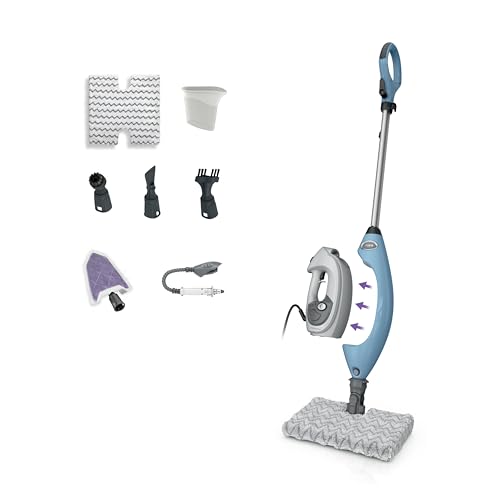
Shark SteamSpot S2001
Why it belongs here: this is the straightforward floor-focused path. Shark lists it for sealed hardwood, laminate, tile, stone, marble and vinyl floors.
Best for: buyers who mainly want steam for sealed hard floors and do not need upholstery, grout-detail or appliance attachments.
Check Current Price on Amazon
Best Example: Multipurpose
BISSELL PowerFresh Slim 2075A
Why it belongs here: it converts from a steam mop into extended-reach and handheld modes, with BISSELL listing sealed floors plus sinks, counters, stoves, microwaves, upholstery, toys and showers among its intended uses.
Best for: shoppers who want one machine for floors plus above-floor household steam cleaning.
Check Current Price on Amazon
Whole-Home Steam Example
Shark Lift-Away S3972BRN
Why it belongs here: Shark describes this format for sealed hard floors plus countertops, appliances, upholstery, car interiors, grout, crevices and window screens.
Best for: buyers whose steam-cleaning list goes well beyond floors and who want a detachable handheld component.
Check Current Price on Amazon
As an Amazon Associate I earn from qualifying purchases. Product availability can change.
Steam Cleaner vs Wet Dry Vacuum for Hard Floors
If the surface itself is steam-safe but your real problem is daily crumbs, liquid spills and pet messes, a steam cleaner may still be the wrong format. A wet dry vacuum can pick up debris and wash the floor in the same pass, while a conventional steam mop usually expects loose debris to be removed first.
See Wet Dry Vacuum vs Steam Cleaner: Which Cleans What Better? before buying based on “steam-safe” alone.
FAQ
Can you steam clean hardwood floors?
Only if the wood is sealed and the flooring manufacturer allows steam. Some Shark and BISSELL steam mops are designed for sealed hardwood, but both brands warn against unsealed floors.
Can you steam clean laminate?
Some steam mops support sealed laminate, but the floor manufacturer must also permit steam. Avoid damaged seams and surfaces whose care guide prohibits heat or moisture.
Can you steam clean grout?
Yes. Detail nozzles and brushes are commonly used for grout. Kärcher specifically recommends direct steam and a round brush where necessary, with brief steam exposure on silicone joints.
Can you steam clean a couch?
Some upholstery can be steam cleaned with an appropriate multipurpose machine, but only when the fabric care instructions allow heat/moisture. Test a hidden spot first.
Can you steam clean carpet?
A traditional steam mop is not a carpet extractor. Some models can refresh carpet with an accessory, but that is different from washing and extracting carpet fibers.
Can steam damage floors?
Yes. Unsealed wood, waxed finishes, vulnerable seams and other heat- or moisture-sensitive surfaces can be damaged. Always check both the flooring and steam-cleaner instructions.
Bottom Line
The safest steam-cleaning rule is not “steam is safe on hard surfaces.” It is: use steam only when the exact surface and the exact machine both permit it.
Sealed hard floors, tile, grout and many hard kitchen/bathroom surfaces are common steam-cleaning targets. Multipurpose machines can add upholstery and other above-floor jobs. Avoid unsealed wood, wax-polished finishes, unglazed ceramic, vulnerable fabrics, heat-sensitive finishes and electrical components.




Comments: 0