
Hardwood Cleaner
Bona Hardwood Floor Cleaner Spray
A ready-to-use hardwood floor cleaner that fits a controlled-moisture routine better than mixing a bucket of water and detergent.
Check Current Price on AmazonUpdated: Oct 17, 2026
Hardwood is durable, but its finish and seams do not benefit from excess water, harsh chemicals or aggressive scrubbing. The safest routine is simpler than many people expect: remove grit first, then clean with minimal moisture and a product appropriate for the floor's finish.
| Tool / Cleaner | Best Use | Hardwood Verdict |
|---|---|---|
| Microfiber dust mop | Dust, hair, fine debris | Excellent |
| Hard-floor vacuum | Crumbs, grit, pet hair | Excellent when the floor head is suitable |
| Microfiber damp mop | Routine deeper cleaning | Excellent with controlled moisture |
| Hardwood floor cleaner | Film, footprints, routine soil | Good when compatible with the finish |
| Wet dry vacuum | Vacuuming + washing in one pass | Can be excellent on compatible sealed floors |
| Steam cleaner | High-temperature cleaning | Not a universal hardwood method |
Hardwood cleaning is less about never using moisture and more about controlling it. A cleaning pad can be damp without leaving water sitting on the floor.
Problems become more likely when water reaches plank seams, penetrates an already damaged finish or remains on the surface long enough to migrate into the wood.
A ready-to-use hardwood floor cleaner that fits a controlled-moisture routine better than mixing a bucket of water and detergent.
Check Current Price on Amazon
Combines a refillable hardwood-cleaner system with a machine-washable microfiber pad, making it easier to control how much liquid reaches the floor.
Check Current Price on AmazonAs an Amazon Associate I earn from qualifying purchases. Check your flooring manufacturer's care instructions before using any cleaner or powered floor washer.
Vinegar is often recommended as a universal DIY cleaner, but hardwood finishes vary. An acidic homemade mixture is unnecessary when the finish manufacturer specifies another cleaning method.
If you want to protect the floor rather than experiment with chemistry, use a cleaner specifically intended for your type of finished wood floor and follow its dilution or application instructions.
A small amount of detergent is sometimes suggested for household cleaning, but too much soap can leave residue and create streaks. The larger issue is that a generic detergent is not automatically appropriate for every hardwood finish.
For routine cleaning, a purpose-made product removes the need to guess at dilution.
Steam is not the default recommendation for hardwood. It combines moisture with heat, and floor manufacturers can differ on whether their products permit it.
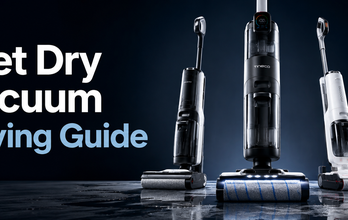
If you are choosing between floor-washing technologies, see our Wet Dry Vacuum vs Steam Cleaner comparison.
Many modern wet dry floor cleaners are specifically designed for sealed hard floors and can control solution application while recovering dirty water. That can make them a convenient choice for busy homes.
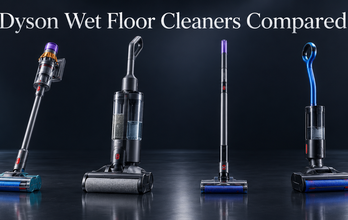
But “hard floor” and “hardwood” should not be treated as interchangeable marketing terms. Check both the machine instructions and the flooring care guidance. Buyers specifically considering Dyson can compare the brand’s wet-floor lineup in Dyson Wet Floor Cleaners Compared.
| Problem | Likely Cause | What to Try |
|---|---|---|
| Long mop streaks | Dirty pad or excess cleaner | Wash/change the pad and reduce product. |
| Cloudy film | Residue buildup | Stop layering cleaner and use the finish-appropriate cleaning method. |
| Dirty lines at edges | Mop is pushing debris | Vacuum thoroughly before damp cleaning. |
| Wet patches | Too much liquid | Use less spray and a drier microfiber pad. |
| Wet dry vacuum streaks | Roller, scraper, solution or suction issue | Use our wet dry vacuum streaking guide. |
Remove solids first and blot liquids promptly rather than spreading them across the floor. Then clean the affected area with a product appropriate for the finish.
For homes where pet mess is a recurring problem, a floor washer can be useful because it separates dirty pickup water from the clean solution supply. Our Best Wet Dry Vacuums for Pet Messes guide covers that use case.
| Risk | Why It Matters | Safer Alternative |
|---|---|---|
| Standing water | Can migrate into seams and vulnerable wood. | Minimal moisture + prompt drying. |
| Abrasive scrub pads | Can scratch or dull the finish. | Soft microfiber. |
| Dirty vacuum wheels / brush | Trapped grit can scratch. | Keep the floor head clean and use the correct hard-floor setting. |
| Unknown harsh chemicals | May affect the finish. | Finish-compatible floor cleaner. |
| Unapproved steam | Adds heat and moisture. | Low-moisture cleaning unless explicitly permitted. |
| Too much cleaner | Can leave residue and streaking. | Use the recommended amount. |
There is no need to wet-clean on a rigid schedule if the floor is already clean. Remove abrasive grit, crumbs and hair frequently; spot-clean spills promptly; then damp-clean when footprints, soil or film actually require it.
High-traffic kitchens, entryways and pet areas will naturally need more attention than bedrooms.
Do not test aggressive cleaning methods on an unknown floor. Try to identify the flooring product, installer documentation or finish first. Older site-finished hardwood, newer engineered wood and factory-finished flooring can have very different care instructions.
Until you know what you have, dry debris removal and conservative spot cleaning are safer than steam, saturation or strong chemicals.
For routine care, remove dry debris first and use a microfiber mop with minimal moisture and a cleaner appropriate for the floor's finish.
A small controlled amount of moisture may be appropriate for many finished wood floors, but soaking or leaving standing water is not. Follow the flooring manufacturer's instructions.
Do not assume it is appropriate for every finish. A purpose-made cleaner approved for your flooring removes that uncertainty.
Only if the flooring manufacturer explicitly permits the method. Steam should not be treated as universally safe for sealed hardwood.
Cleaner residue, too much product or a dirty pad can contribute to cloudy film. Check the finish's recommended cleaning method before trying stronger chemicals.
It can be a good option on compatible sealed hardwood when both the machine and flooring manufacturer permit wet cleaning. Avoid using it on flooring that should not be exposed to moisture.
Yes. Removing grit first reduces scratching risk and prevents a wet mop from dragging debris across the finish.
The best hardwood-cleaning routine is deliberately gentle: remove grit first, use a soft microfiber surface, control moisture, use only as much cleaner as necessary, and respect the care instructions for the actual floor.
You do not need aggressive chemicals or a soaking-wet mop to keep hardwood clean. If you want more automation, a compatible wet dry vacuum can be worthwhile; if you prefer a simple manual method, a microfiber spray mop and hardwood-specific cleaner remain a strong combination.

Aug 26, 2026
Aug 24, 2026
Aug 24, 2026



Comments: 0