Which Vacuum Part Do You Need?
| Symptom |
Most Likely Area |
First Step |
When to Replace |
| Brush roll does not spin |
Belt, brush roll, motorized head |
Check for hair/debris and confirm the brush setting is on |
Replace belt if stretched/broken; replace roller if seized or damaged |
| Brush roll spins slowly or stops on carpet |
Belt or roller resistance |
Remove tangles and inspect belt tension |
Replace worn belt or binding roller |
| Vacuum smells like hot rubber |
Belt or jammed roller |
Turn off immediately and inspect the floor head |
Replace damaged belt after clearing the jam |
| Carpet pickup becomes weaker |
Brush roll wear, belt slip, airflow restriction |
Inspect roller condition, belt, filter, and blockages |
Replace the part that is actually worn |
| Suction drops |
Filter or blockage |
Clean reusable filter and inspect airway |
Replace filter if damaged or cleaning no longer restores performance |
| Dust escapes from vacuum |
Filter fit, seal, bag/bin |
Check filter installation and seals |
Replace damaged filter or gasketed filter assembly |
Start With Diagnosis, Not Shopping
Vacuum parts often create similar symptoms. A brush roll that stops can be caused by a broken belt, but it can also be caused by hair wrapped around the roller, a seized bearing, a jammed cleaner head, or an electronic shutoff on a motorized head.
Likewise, weak suction can come from a dirty filter, but a full bin, clogged hose, blocked wand, or packed cleaner head can create the same problem.
Best ownership rule: clean and inspect first. Buy the replacement part only after you know which component is worn or damaged.
When Should You Replace a Vacuum Belt?
Traditional upright vacuums often use a belt to transfer motor power to the brush roll. Over time, the belt can stretch, glaze, crack, or snap.
Replace if the belt is brokenA snapped belt will usually stop brush-roll rotation completely.
Replace if the belt slipsA stretched or glazed belt may let the roller spin weakly or stop under carpet load.
Inspect immediately after a jamA blocked brush roll can overheat or damage the belt even if the belt did not snap.
Do not keep running a jammed vacuum. If you smell hot rubber or the brush roll stops suddenly, switch the vacuum off and inspect the head before continuing.
When Should You Replace a Brush Roll?
A brush roll wears more gradually than a belt. The roller can still spin while cleaning performance declines because bristles have shortened, fins have worn, bearings drag, or the roller surface becomes damaged.
| Brush Roll Condition |
What to Do |
| Hair/string wrapped around roller |
Clean it first |
| Bristles look shorter or flattened |
Consider replacement if carpet agitation has weakened |
| Roller does not turn freely by hand when removed |
Inspect end caps/bearings; replace if binding remains |
| Soft roller is torn or deeply worn |
Replace it |
| Roller has cracks, deformation, or missing sections |
Replace it |
| Carpet pickup remains poor after cleaning the head |
Compare roller wear, belt condition, and airflow before buying parts |
When Should You Replace a Vacuum Filter?
Filters require a different decision. A dirty washable filter usually needs cleaning, not replacement. Replace it when the filter is torn, misshapen, permanently clogged, no longer seals correctly, or proper cleaning no longer restores performance.
For the full cleaning-vs-replacement decision, see How Often Should You Replace a Vacuum Filter?.
Replacement Parts for Popular Vacuum Families
These examples show why exact-model matching matters. A part labeled simply “Shark belt” or “Dyson brush bar” is too broad; use the actual vacuum family and part fit.
Belt Replacement
Shark Navigator / Lift-Away Belt Set
Fits: the listing includes NV350, NV351, NV352, NV353, NV355, NV356, NV357, NV360, UV400, UV410, UV420, UV440 and several related models.
Best for: owners whose Navigator or Lift-Away brush roll is slipping or no longer spinning correctly after debris has been cleared.
Check Current Price on Amazon
Brush Roll Replacement
Shark Navigator Replacement Brush Roller
Fits: the listing names NV350, NV351, NV352, NV353, NV360, NV356E and NV42.
Best for: Navigator-family vacuums with a worn, damaged, or binding brush roller after tangles and debris have been removed.
Check Current Price on Amazon
Filter Replacement
Shark Stratos AZ3002 / AZ3000 Filter Kit
Fits: Shark Stratos AZ3002, AZ3000 and AZ3000W according to the listing.
Best for: Stratos owners whose filters are damaged, degraded, or no longer recover after correct cleaning.
Check Current Price on Amazon
Stratos Brush Roll
Shark Stratos AZ3002 Replacement Brush Roller
Fits: the listing includes AZ3002, AZ3000, LA702 and LA555.
Best for: Stratos owners with a damaged or worn roller where cleaning the floor head no longer restores normal operation.
Check Current Price on Amazon
Cordless Filter
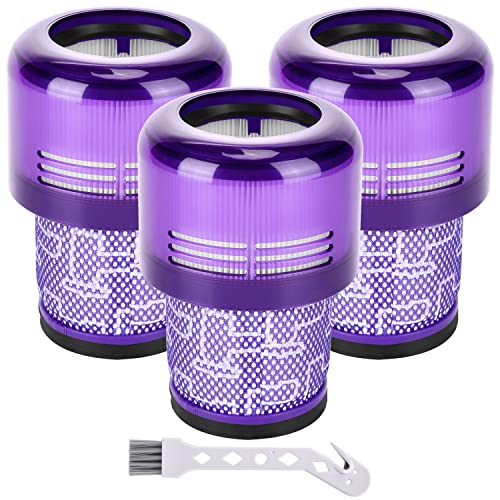
Dyson V11 / V15 Detect Replacement Filter
Fits: the listing names Dyson V11, V15 and SV28 Detect families.
Best for: Dyson owners who have already followed the normal filter-washing routine but now need to replace a worn or damaged filter.
Check Current Price on Amazon
Cordless Brush Bar
Dyson V12 / V15 Laser Slim Fluffy Brush Bar
Fits: the listing identifies Dyson V12 and V15 and references part 971634-01.
Best for: owners replacing the soft roller itself rather than the complete cleaner head.
Check Current Price on Amazon
As an Amazon Associate I earn from qualifying purchases. Check the exact model number and part fit before ordering.
How to Match a Replacement Part Correctly
1. Find the exact modelUse the model label on the vacuum rather than relying only on the family name.
2. Check part numbers where availableA matching manufacturer part number is stronger evidence than appearance alone.
3. Read exclusionsIf a listing says “not for” a similar model, treat that exclusion seriously.
For Shark in particular, Navigator, Rotator, Stratos, Detect Pro, and PowerDetect machines can look similar while using different cleaner heads, filters, and service parts. Use the Shark Upright Vacuum Buying Guide if you first need to identify where your model sits in the lineup.
OEM vs Third-Party Vacuum Parts
OEM parts are usually the simplest compatibility path because they were designed for the exact machine. They can also cost more or be harder to find for older vacuums.
Third-party parts can be sensible when the listing clearly names the exact model and part family. Avoid broad claims such as “fits most Shark vacuums” or “universal Dyson roller.”
Compatibility matters more than bundle size. A six-pack of the wrong filter or two belts that do not fit your pulley geometry are not good value.
Should You Replace the Part or the Vacuum?
| Situation |
Best Next Step |
| One belt failed; vacuum otherwise works well |
Replace the belt |
| Brush roll is worn; motor and suction are good |
Replace the brush roll |
| Filter is worn but machine is healthy |
Replace the exact-compatible filter |
| Belt, roller, filters, hose, and cleaner head all need work |
Compare total repair cost with a current vacuum |
| Vacuum is old and major motor/electronic faults are present |
Replacement may make more sense than continuing parts repairs |
| The vacuum never matched your flooring or pet-hair needs |
Use a buying guide rather than repeatedly repairing the wrong format |
If you are ready to replace an upright rather than repair it, start with Best Upright Vacuums of 2026. If you are considering switching formats, compare Best Cordless Vacuums.
FAQ
How do I know if my vacuum belt is bad?
A broken belt usually stops the brush roll completely. A stretched or slipping belt may allow the roller to spin weakly but stop under carpet load. Clear tangles first before assuming the belt is the cause.
How often should a vacuum belt be replaced?
There is no universal interval for every vacuum. Replace the belt when the manufacturer's schedule calls for it or when the belt is stretched, cracked, glazed, slipping, or broken.
How do I know if my brush roll needs replacing?
Replace it when bristles or fins are badly worn, the roller is damaged or deformed, bearings bind, or cleaning no longer restores proper floor contact and rotation.
Can a worn brush roll reduce carpet pickup?
Yes. Even if the roller still spins, flattened bristles or worn agitation surfaces can reduce how effectively the vacuum lifts debris from carpet.
Should I replace a dirty vacuum filter?
Not automatically. If the filter is washable, clean it first. Replace it when damaged, permanently clogged, misshapen, or no longer performing correctly after proper maintenance.
Are vacuum belts universal?
No. Belt size, width, elasticity, pulley design, and cleaner-head geometry vary by model. Buy by exact compatibility.
Are third-party vacuum parts safe to use?
They can be useful when the listing clearly names your exact vacuum model and part type. Avoid vague universal-fit claims and double-check part numbers where available.
Final Verdict
Replace the part that is actually worn—not the part that merely seems most likely. Brush-roll problems can come from belts or tangles, suction problems can come from filters or blockages, and visible wear is a stronger buying signal than guesswork.
For a healthy vacuum, belts, brush rolls, and filters are usually much cheaper to replace than the entire machine. Match the exact model, check part fit carefully, and only move to a new vacuum when multiple expensive components are failing or the existing machine no longer suits your home.
Related Guides






Comments: 0