Portable Power Stations: Reviews, Comparisons & Buying Guides
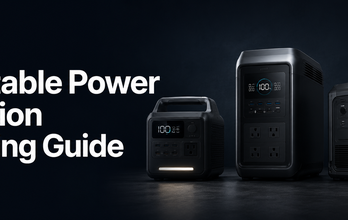
Portable power stations range from compact batteries for phones and camping gear to expandable systems capable of keeping refrigerators, RV equipment, and essential home appliances running during outages. This hub organizes our power-station guides by the decision you actually need to make: size, use case, brand, or exact model.
Start Here
Learn How to Choose Before Comparing Models
Choose by Use Case
Choose a Power Station Brand
Compare Power Station Brands
Popular Model Decisions
Which Guide Should You Read?
| Your Question | Start With | Page Type |
|---|---|---|
| How do I choose the right portable power station? | Portable Power Station Buying Guide | Category Buying Guide |
| Which portable power station should I buy? | Best Portable Power Stations | Best Products |
| I want emergency power for my house | Best for Home Backup | Best For |
| I need power for camping | Best for Camping | Best For |
| I need power for an RV | Best for RVs | Best For |
| I want to charge from solar panels | Best Solar Generators | Buying Guide |
| I want to spend under $1,000 | Best Under $1,000 | Best For |
| Which EcoFlow should I buy? | EcoFlow Buying Guide | Brand Buying Guide |
| Which BLUETTI should I buy? | BLUETTI Buying Guide | Brand Buying Guide |
| Which Jackery should I buy? | Jackery Buying Guide | Brand Buying Guide |
| Which Anker SOLIX should I buy? | Anker SOLIX Buying Guide | Brand Buying Guide |
A Simple Portable Power Station Buying Path
- Start with the category guide. Use the Portable Power Station Buying Guide to understand capacity, output, LiFePO4, charging, solar, expansion, UPS/EPS behavior, and runtime math.
- List what you need to power. Phones and laptops require far less capacity and output than refrigerators, microwaves, pumps, RV air conditioners, or home circuits.
- Separate capacity from output. Watt-hours tell you roughly how long loads can run; watts tell you whether the power station can run them at all.
- Choose portability versus expansion. Compact 1kWh-class stations are easier to carry. Large home-backup systems trade portability for more output, storage, and battery expansion.
- Move to the ranked page. Once you know the class you need, use Best Portable Power Stations or the Camping, CPAP, RV, Home Backup, or Under $1,000 pages.
- Choose the brand or exact model last. Brand guides and head-to-head comparisons become much more useful after the use case and size class are clear.
Portable Power Station Size Guide
| Power Station Class | Typical Use | Best Starting Guide |
|---|---|---|
| Compact | Phones, laptops, cameras, lights, short camping trips | Camping Guide |
| ~1kWh class | Camping appliances, CPAP, refrigerators for shorter periods, general emergency use | Buying Guide |
| ~2kWh class | RV use, longer appliance runtime, stronger outage backup | RV Guide |
| 3–4kWh+ / expandable | Home backup, high-draw loads, extended outages, larger solar systems | Home Backup Guide |
Portable Power Station FAQ
What is the best portable power station for most buyers?
If you are still deciding what size and features you need, start with the Portable Power Station Buying Guide. If you are ready for actual model recommendations, use Best Portable Power Stations.
Can a portable power station run a refrigerator?
Yes, when the station has enough continuous and surge output. Runtime depends on battery capacity, refrigerator efficiency, ambient temperature, compressor cycling, and inverter losses.
What is the difference between a portable power station and a solar generator?
The terms often overlap. A solar generator usually means a portable power station that can recharge from solar panels, but panels may be included in a bundle or sold separately.
Which brand should beginners consider?
Jackery is particularly easy to understand, while EcoFlow offers a deeper expansion ecosystem. BLUETTI is often compelling for capacity value, and Anker SOLIX is a strong all-around alternative.
How large a power station do I need for home backup?
Start by adding the wattage and expected runtime of the appliances you actually need during an outage. Large refrigerators, pumps, microwaves, HVAC equipment, and 240V loads can push buyers toward larger expandable systems.

Comments: 0