Choose a Battery Lawn Mower
Battery is the better choice for typical suburban lawns, low-maintenance ownership, quiet mowing, easy storage, and anyone already using cordless yard tools.
Updated: Oct 09, 2026
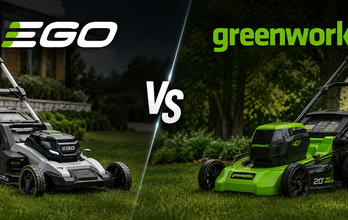
Lawn Mower Comparison Guide 2026
Most homeowners should buy a battery lawn mower. Modern cordless models are easier to start, quieter, cleaner, and far less demanding to maintain. Gas still wins for very large properties, repeated heavy-duty mowing, and users who need continuous runtime without waiting for batteries to recharge.
Battery is the better choice for typical suburban lawns, low-maintenance ownership, quiet mowing, easy storage, and anyone already using cordless yard tools.
Gas makes more sense for very large properties, frequent heavy mowing, commercial work, and buyers who prioritize continuous refueling over convenience.
Overall winner: Battery. For the average homeowner, the easier ownership experience outweighs the remaining runtime advantage of gas.
| Category | Battery Lawn Mower | Gas Lawn Mower | Winner |
|---|---|---|---|
| Starting | Push-button start | Usually pull cord, sometimes electric start | Battery |
| Maintenance | Minimal routine maintenance | Oil, fuel, filters, spark plugs, seasonal care | Battery |
| Noise | Much quieter | Significantly louder | Battery |
| Runtime | Limited by battery capacity | Can continue after quick refueling | Gas |
| Power in Heavy Grass | Strong on modern premium models | Consistently strong across demanding conditions | Gas |
| Residential Convenience | Excellent | More work to own and operate | Battery |
| Storage | No fuel storage and often folds vertically | Requires fuel-safe storage and more care | Battery |
| Operating Cost | Lower ongoing cost | Fuel and maintenance add recurring cost | Battery |
| Very Large Properties | Possible with multiple batteries or premium systems | Still easier for continuous long sessions | Gas |
| Environmental Impact While Mowing | No direct exhaust emissions | Produces exhaust | Battery |
Gas mowers still have an advantage when mowing conditions are consistently difficult. Thick, wet, overgrown grass demands sustained power, and gas engines can keep working as long as the operator has fuel.
That does not mean battery mowers are weak. Premium cordless models can handle normal residential grass, mulching, bagging, and moderate overgrowth very well. For regularly maintained lawns, the practical performance difference is often much smaller than buyers expect.
Battery runtime depends on battery capacity, grass height, moisture, terrain, cutting height, blade speed, and use of self-propelled drive. A mower that handles a flat half-acre under ideal conditions may cover less when the grass is thick or wet.
Gas mowers remain simpler for very long sessions because refueling takes only a few minutes. Battery users can solve this with a second battery, rapid charger, or dual-battery mower, but those solutions increase the total cost of the system.
| Lawn Size | Better Choice | Why |
|---|---|---|
| Small yard | Battery | More than enough runtime with easier handling and storage |
| Typical suburban lawn | Battery | Best overall balance of convenience and performance |
| Half-acre | Battery | Well suited to modern 21-inch cordless mowers with adequate battery capacity |
| One acre | Depends | Battery works with enough capacity; gas is easier for uninterrupted mowing |
| Very large property | Gas | Continuous refueling remains more practical for repeated long sessions |
Battery mowers eliminate many of the routine service tasks associated with small engines. There is no gasoline to stabilize, no oil to change, no spark plug to replace, and no carburetor to clean.
Gas mowers can last for many years, but reliability depends more heavily on maintenance quality. Fuel left in the system, neglected oil changes, dirty filters, and seasonal storage problems can all create starting or performance issues.
Battery mowers are much quieter than gas models, which makes them better for early mowing, dense neighborhoods, and users who simply want a less tiring experience.
They also start instantly and usually produce less vibration. A gas mower may still deliver strong cutting performance, but the noise, exhaust, pull-start routine, and engine vibration make it less pleasant to use.
For homeowners who value convenience as much as cutting performance, battery wins decisively.
Battery mowers can have a higher initial cost when a large battery and rapid charger are included. Gas mowers may appear cheaper at purchase, especially in basic push-mower categories.
Over time, battery ownership is usually simpler and less expensive because there is no gasoline, engine oil, spark plug service, or carburetor maintenance. The main long-term battery expense is eventual battery replacement.
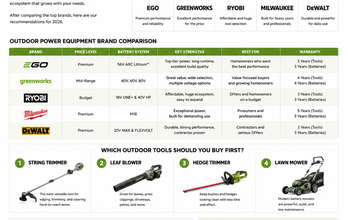
A battery mower is not just a single purchase. It often becomes the foundation of a cordless outdoor system. The same batteries may power a string trimmer, leaf blower, hedge trimmer, chainsaw, or snow blower.
That ecosystem can create excellent long-term value, but it also makes brand choice more important. Buyers should compare the full tool lineup before committing to a voltage platform.
Gas ownership is less ecosystem-dependent. Fuel is universal, and buyers can mix brands more easily. The trade-off is that each engine brings its own maintenance requirements.
For slopes, self-propelled drive matters more than the power source. A good self-propelled battery mower can be easier to control than a heavy push gas mower.
For thick grass, gas remains the safer choice when conditions are consistently demanding. However, a premium battery mower with a brushless motor, high-output battery, and sharp blade can handle most maintained residential lawns without difficulty.
| Buyer Type | Recommended Power Source | Reason |
|---|---|---|
| Small-yard homeowner | Battery | Quiet, compact, easy to start, and simple to store |
| Typical suburban homeowner | Battery | Best overall ownership experience |
| Half-acre homeowner | Battery | Modern full-size cordless models provide enough practical coverage |
| One-acre homeowner | Battery or Gas | Depends on battery capacity, terrain, and tolerance for recharging |
| Commercial landscaper | Gas | Continuous runtime and heavy-duty durability remain important |
| Low-maintenance buyer | Battery | No fuel, oil, spark plugs, or carburetor care |
Premium battery mowers can match gas-like performance for most maintained residential lawns. Gas still has an advantage in repeated heavy-duty mowing and continuous work.
Runtime depends on battery capacity, grass condition, terrain, and use of self-propelled drive. Many modern cordless mowers can handle a typical residential lawn on one charge.
They are usually cheaper and easier to maintain because they eliminate fuel, oil changes, spark plugs, filters, and many common engine-service tasks.
No. Gas remains useful for very large properties, demanding mowing, and commercial applications. Battery is simply becoming the better fit for more residential buyers.
Yes. A full-size battery mower with adequate battery capacity can be an excellent choice for a half-acre lawn.
Both can last for years with proper care. Gas engines need more maintenance, while battery owners should expect the battery pack to lose capacity gradually over time.
Battery lawn mowers are the better buy for most homeowners. They are easier to start, quieter, cleaner, simpler to maintain, and powerful enough for normal residential mowing.
Gas lawn mowers still win for very large properties and continuous heavy-duty work. Their ability to refuel quickly remains useful when runtime matters more than convenience.
For a small, medium, or typical half-acre yard, choose battery. For repeated long sessions, severe overgrowth, or commercial use, gas remains the safer choice.

Aug 26, 2026
Aug 24, 2026
Jul 21, 2026
Comments: 0